repeal the federal mandatory minimum sentences and the mandatory sentencing guidelines;
direct the administration not to interfere with the implementation of state initiatives that allow for the medical use of marijuana, and
shut down the Drug Enforcement Administration.
The Constitution gives the Federal Government no enumerated authority to wage a "War on Drugs."
The money taken from your paycheck and spent on the "War on Drugs." is far greater than you are aware of, and could be spent more effectively on other methods of treatment, with greater success than prisons.
A century ago, heroin was legal, but there were not millions of Americans addicted to heroin. A century ago, cocaine was legal, but there were not waves of crime and turf wars. A century ago, it was legal to teach Christianity in public schools. The Drug Problem is essentially a religious problem.
Until the early 1900s, the federal government did little to regulate or control the sale or use of alcohol or drugs — except for taxing alcohol.
It may be hard to believe today, but early in the 20th century a 10-year-old girl could walk into a drug store and buy a bottle of whiskey or a packet of heroin. She didn't need a doctor's prescription or even a note from her parents. Any druggist would sell to her without batting an eye; he would assume she was on an errand for her parents.
While that may seem amazing now, it wasn't to anyone then. Heroin was sold in packages as a pain reliever or sedative — just as aspirin or other analgesics are sold today. The measured dose didn't make anyone high, and rarely did anyone become addicted — certainly no
more often than with sleeping pills today.
Given such easy access to liquor and drugs, we might assume that America's adults and children were all high on booze and drugs. But that wasn't the case.
There were alcoholics and drug addicts then, just as there are today. But there were far fewer of them — because there were no criminal dealers trying to hook people on drugs or turn them into alcoholics.
Is it the case that there were fewer addicts 100 years ago because there were more armed government agents patrolling the streets and handing out 20-year prison terms for recreational drug use? No. In fact, it seems that the more our God-given rights are violated by an ever-increasing army of government enforcers, and the more the
omnipotent state seeks to be as god, the more hopeless, confused, and even defiant young Americans become, and the more frequently they escape a senseless world through drugs.
Now let's consider the difference between the gentle invisible hand and the visible fist of government with regard to violence. Well-intentioned
or not, government is violence. As Buckminster Fuller said, "The end move in politics is to pick up a gun." Laws are laws only because government can use coercion against anyone who violates them. In contrast, when violence occurs in a free society, it's a crime. The rule is voluntary exchange.
The "freedom to choose." The Golden Rule. The gentle invisible hand. Violence is the day-to-day normal activity of criminals — and government. Sometimes it's hard to tell the difference. The visible fist of government. When you think about violence, think about this: government has the War
on Poverty, the War on Illiteracy, the War on Drugs. And these are not just metaphors, they're real wars. They are funded at gun point and enforced at gun point. Of course, the "War on Drugs" isn't a war on drugs. No one ever shot an aspirin. But it really is a war. We have Czars — people like Bill Bennett who see nothing
wrong with beheading drug dealers. Former Speaker of the House Newt Gingrich — himself a former pot smoker — called for the death penalty for drug offenders, including those who carry just two ounces of marijuana into the country. Prohibition seems to bring out a terrible vindictiveness and cruelty in
some people. In 1929, Mrs. Etta Mae Miller was convicted of having sold a single quart of liquor. This was her fourth such offense, so her sentence was life imprisonment. Life in prison for selling a quart of liquor. The General Secretary of the Board of Temperance, Prohibition and Public Morals [sic] said, "Our only regret is that
the woman was not sentenced to life imprisonment before her ten children were born. When one has violated the Constitution four times, he or she should be segregated from society to prevent the production of subnormal offsprings." Today's prohibition is far more savage. In 2006, a record 829,625
people were arrested on marijuana charges — over 85% of them for mere possession. There are hundreds of people serving life sentences — with no possible parole — for marijuana offenses. Journalist Eric Schlosser told PBS there are cases of people serving life without parole for possession of a single joint or less. Thousands
of Americans are serving at least five years in federal prison — with no possible parole — for possessing as little as five grams of crack cocaine. Two pennies weigh more than five grams. The proper role of government is to protect us from violence, theft, and fraud. Yet government, directly or
indirectly, causes most of the violence, theft, and fraud in our society.
Government promotes violence in two ways. The first is as an unintended consequence of laws and programs. For example, one third to one half of criminal offenses are committed by drug addicts driven into crime by the Drug War's black market. Nobel Prize-winning economist
Milton Friedman estimated that up to one half of the homicides in this country — 10,000 deaths per year — result directly from the Drug War. A free society would end this violence overnight. And in a free society we could better defend ourselves from violence. Citizens
would have the indisputable right to keep and bear arms. And a gun is a wonderful deterrent to violence. In states that have "shall issue" laws (where people without criminal records or evidence of mental illness are permitted to carry guns), crime rates are much lower than in states where there are no such laws. A major study
by University of Chicago law professor John Lott shows that these states reduced robbery by 3%, aggravated assaults by 7%, and murders by 8.5%. It is estimated that extending shall-issue laws to states that don't now have them would lead to 12,000 fewer robberies per year, 60,000 fewer aggravated assaults, 4,177 fewer rapes, and 1,570
fewer murders. That means the visible fist of government is causing a lot of unnecessary human suffering through its gun-control laws. The second way government promotes violence is by itself committing it directly against citizens. Government
seizes people's property when they've never even been charged with a crime. This is called "asset forfeiture." A better term might be "robbery with a badge." Under forfeiture laws, inanimate objects can commit crimes. Such things as cars and boats are charged with a crime, as a way for government to confiscate them. Imagine
if I came to your house and said, "I don't approve of the kind of beer you drink. And I'm sure you drove your car to the store to buy it, so your car's guilty and I'm taking it." People would declare me insane. I sure wouldn't try it in one of the "shall-issue" states. Today
more than 100 federal laws authorize federal agents to confiscate private property allegedly involved in violations of statutes on wildlife, gambling, narcotics, immigration, money laundering, and on and on. Federal agents can seize your property with no court order and no proof of legal violations. Billions of dollars worth of property
has been seized in this way from tens of thousands of Americans who have never been accused of a crime or stood trial. It's so difficult to get their property back that most victims never bother to try. The IRS can freeze your bank account or put a lien on your house without a hearing of any kind. And
government can take property through eminent domain. Recently near my home the county government forced a black church to sell its land to make room for a tunnel. The so-called "fair" price paid wasn't enough to rebuild the church. A whole church community will be displaced for a bureaucrats' idea of progress. In a free
society, not only would this not happen to a church, but there'd be no BATF to burn churches down. Is your church BATF-approved? Government theft is more insidious than free-lance theft. Lysander Spooner, one of America's most brilliant political theorists, talked about this in his masterpiece, No Treason.
He compared ordinary robbers to tax collectors. The robber, he pointed out, robs you only once — and then goes on his way. The government, on the other hand, robs you year after year after year. Then it has the gall to say it's doing you a service and expects your gratitude. The visible fist of
government. In a free society, the right to property and privacy would be sacred. It would be, as the great English statesman William Pitt so eloquently described, " . . . the poorest man may in his cottage bid defiance to all the forces of the Crown. It may be frail — it's roof may shake — the
wind may blow through it — the storms may enter — but the king of England cannot enter — all his force dares not cross the threshold of the ruined tenement." In a free society, we will have that kind of protection. Those who want your property will have to negotiate with you. The gentle
invisible hand, not the visible fist. What an incentive to work for a free society! The gentle invisible hand vs. the visible fist of government. It's as different as night and day, robbery and voluntary exchange, war and peace. Government is at perpetual war against people
and their property. We desire — we deserve — peace.
He searched out a dope dealer; he paid for some marijuana; he took it home; he rolled it up in paper; he lit it; he held it up to his mouth; but he did not inhale.
Right.
Kevin Craig did not inhale. Kevin Craig has never even been in possession of any marijuana or other controlled substance. Kevin Craig does not particularly like mind-altering substances. "Be not drunk with wine, but be filled with the Spirit" (Ephesians
5:18).
But just as alcohol prohibition did not work, so the "War on Drugs" has been an unmitigated disaster, causing more harm than good, if any. Drug abuse is a symptom of a society which has drifted away from "Liberty
Under God." This is not a problem which can be solved by "getting tough" on drugs, that is, increasing government coercion and decreasing Constitutional liberties. Such a cure is worse than the disease.
Today the government will not allow "Liberty Under God" to be taught in government-run schools. Millions of children are indoctrinated in the philosophy of cosmic meaninglessness and defeatism. They are
virtually taught to be drug addicts. We should be surprised that only half of all students end up experimenting with mind-altering, spirit-deadening drugs.
To say that drugs should be "legal" is simply to admit that the initiation of force is not the solution to a deeply spiritual/religious problem. Government aggression and violation of the Fourth Amendment is not the answer to drug abuse. We need more "government" than "the
government" can provide. We need self-government, which is the product of home, school, church, business, and other non-governmental institutions.
Marijuana and other drugs should once again be "legalized," and the billions of dollars presently squandered by the government should be used as families deem fit to prevent substance abuse. This will make our neighborhoods safe again, eliminate the hold organized crime has on the market for certain drugs, and eliminate
widespread government corruption caused by huge drug profits.
True conservatives should not be working to conserve the "war on drugs," but should work to conserve the America that existed when drugs were legal. It is not the case that America was a Christian nation because drugs were legal. Drugs were legal because America was
a Christian nation.
It is more important for government to send the message that "crime is wrong" -- even crime committed by the government -- than it is to send the message that "using drugs is wrong." But this
is a moral message. Isn't teaching morality and helping young people know the joy of living in God's Creation a violation of "the separation of church and state?" Yes, according to those who wish to increase funds for "the war on
drugs" by seizing your property.
June 17, 2011 marks the 40th anniversary of Richard Nixon's "War on Drugs." The cost has been over a trillion dollars, 40 million people imprisoned, and untold thousands of people killed. The "enemy" in this war is now stronger than ever.
For more videos and information about drug policy, go here.
"We start with first principles. The Constitution creates a Federal Government of enumerated powers. See U. S. Const., Art. I, §8. As James Madison wrote, "[t]he powers delegated by the proposed Constitution to the federal government are few and defined. Those which are to remain in the State governments are
numerous and indefinite." The Federalist No. 45, pp. 292-293 (C. Rossiter ed. 1961)."
In the early part of the 20th century, "teetotalers" wanted the federal government to prohibit "the manufacture, sale, or transportation of intoxicating liquors," but "We the People" had not delegated any such powers to the federal government.
Prohibition was unconstitutional until the U.S. Constitution was amended by the Eighteenth Amendment. After Prohibition was found to be a massive failure -- failing to end alcohol abuse and
creating organized crime -- the 18th Amendment was repealed by the Twenty-first Amendment.
The Constitution has never been Amended to give the federal government power over drugs.
The "War on Drugs" is as unconstitutional as Prohibition would have been if the Constitution had not been amended. But today's Republicans and Democrats do not have as much respect for the Constitution as politicians 100 years ago. For today's politicians, taking an
oath to "support the Constitution" is just a formality.
State and federal governments in the United States face massive looming fiscal deficits. One policy change that can reduce deficits is ending the drug war. Legalization means reduced expenditure on enforcement and an increase in tax revenue from legalized sales.
This report estimates that legalizing drugs would save roughly $41.3 billion per year in government expenditure on enforcement of prohibition. Of these savings, $25.7 billion would accrue to state and local governments, while $15.6 billion would accrue to the federal government.
Approximately $8.7 billion of the savings would result from legalization of marijuana and $32.6 billion from legalization of other drugs.
The report also estimates that drug legalization would yield tax revenue of $46.7 billion annually, assuming legal drugs were taxed at rates comparable to those on alcohol and tobacco. Approximately $8.7 billion of this revenue would result from legalization of marijuana and $38.0 billion from legalization of
other drugs.
To every high-school student in this country between the ages of 15 and 18, this letter is to you. If there is ever something that you should take the time to learn about, it is government.
Why? — you ask. If your idea of government is endless babbling by old congressional codgers on C-SPAN, you’re partly right. The art of government, or politics, is less entertaining than a visit to the dentist. However, hidden among all the babble of congressional rules and yeas and nays that you hear on television, the real secret that is never explained to
you in school is that government is force, and government can use this force to violate your rights.
It is through government that other people can take your money, forbid you to visit foreign countries, prevent you from drinking alcohol, mandate attendance in public (i.e., government) schools, and even force you into the military to possibly die in battle thousands of miles away from American shores. In short, you need to be interested in government because
government officials can adversely affect your lives in the most serious of ways.
Since government at its basic level is force, what should the role of government be? After all, with force government can act in just about any way that we allow it to, right or wrong. Philosophers have debated the question for centuries, but a sound rule of thumb that has emerged is that government should defend our rights, while at the same time not violate
them.
In other words, government should protect us from the violence of others but not initiate violence against us. The government should not be allowed to steal from us, it should not be allowed to enslave us, and it should not be allowed to murder us. In short, it should protect our fundamental rights but not transgress them.
It sounds pretty straightforward, doesn’t it? Government should not prevent any activity that does not violate the rights of another person. However, you’ll see, in fact, that most of the things that government does today violate individual liberty in one way or another. Let’s look at an example.
The drug war
One example that all of you are probably familiar with is the drug war. This ought to be an easy one for all of you. You probably have friends who have done drugs, and you may have even heard of undercover narcs in your school. I am certainly not telling you that doing drugs is okay because, as you have been told a million times by your parents and teachers,
drugs can and do kill people. At the very least, they can numb your brain and make you stupid. However, what your parents and teachers do not tell you is that government has no right to throw anyone in jail for doing drugs. If someone sits in front of his television and smokes a joint, whose rights has he violated? Nobody’s!
Last year alone, more than 1.8 million people were arrested on drug offenses and, with the exception of those who used violence against others, not one of them deserves to be behind bars. Plain and simple, drugs should be legalized, even the hard ones. As long as people don’t initiate force against others in the process, people should be free to do unhealthy
things. That’s what genuine freedom is all about it.
There are many more examples of the abuses that we suffer at the hands of government, but as long as you learn this one lesson — that government is the biggest threat to the freedom of its citizenry — you are well on the way to becoming an educated citizen and a patriot. There are no parting words more appropriate with which I could leave you than
these words attributed to George Washington: “Government is not reason; it is not eloquence; it is force. Like fire, it is a dangerous servant and a fearful master.”
That is why you should pay attention to government.

 Now let's consider the difference between the gentle invisible hand and the visible fist of government with regard to violence.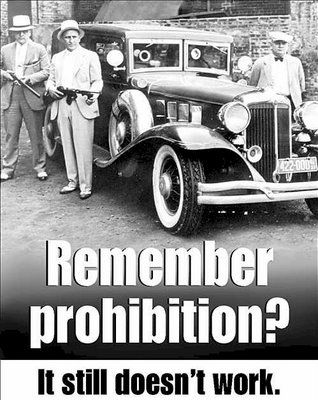
 )."
)."