recognize that Western Civilization is Christian Civilization
You would rather live in America than in Laos or Zimbabwe. This isn't because Whites are superior to Asians or Africans. You would rather live with Asians in Hong
Kong than stand in line for four hours with a bunch of Caucasians in Moscow waiting to buy a quart of milk, and you would rather spend a week at an all-black Southern Baptist Church camp than a week in a Soviet Gulag, being tortured
by white atheistic communists. This is because Western Civilization is better than Eastern Civilization. Western Civilization is better than Buddhist Civilization or animist tribalism.
And this is because Western Civilization is Christian Civilization.
Imagine that you're walking down the aisle of your local grocery story buying the things your family needs, choosing from tens of thousands of hygienically packaged,
neatly displayed, economically priced items that have been gathered for your convenience from around the world. There are still millions of people on this planet (though their numbers are rapidly
evaporating) who would think this is a miracle, and that you must be one of the richest people alive.
Now imagine that you're caught in some strange time-warp, and you find yourself in a strange land, in a strange time. You're no longer getting
your food from the shelves in the store, nor are you wearing your mass-produced cotton clothing. There is no sign of "civilization." You are among people that cannot speak your language.
You are in the exact same spot you were in when you
were reaching for the milk, but now you are hundreds of years in the past. You are now living with the "indigenous peoples" of the Americas, centuries before Christopher ("Christ-bearer")
Columbus would meet them in 1492.
No suburban home with hot and cold running water, air conditioning, and protection from storms.
No doctor, no hospital.
No grocery stores.
No car, no way to escape except on foot. And nowhere to
escape to.
Do you feel like you've been "liberated?" Are you now "free" from status symbols, paying bills, and keeping up with the Joneses?
Or do you feel trapped?
Can you get used to your new life?
Will you celebrate the "thriving culture" that Columbus will someday meet? Or will you long for "western civilization" for the rest of your life? -- a life which now, in this new (to you) time and place, will be "solitary,
poor, nasty, brutish and short?"
You would rather live in America than in Laos or Zimbabwe. This isn't because Whites are superior to Asians or Africans.
You would rather live with Asians in Hong Kong than stand in line for four hours with a bunch of Caucasians in Moscow waiting to buy a quart of milk, and you would rather spend a week at an
all-black Southern Baptist Church camp than a week in a Soviet Gulag, being tortured by white atheistic communists. This is because Western Civilization
is better than Eastern Civilization. Western Civilization is better than Buddhist Civilization or animist tribalism.
And this is because Western Civilization is Christian Civilization.
The English word "civilization" comes from the same Latin root as "city." Augustine wrote a book "On the City of God" (De Civitate Dei).
• "The City of God" is civilized.
• "The City of Man" is uncivilized.
The City of God leads to life, peace, and prosperity, while the "City of Man" ultimately leads to death, either through tyranny or through chaos and meaninglessness.
Our job as human beings is to build
the City of God following God's Blueprints. This is the only path to lasting civilization.
The world before Christmas was a world of dehumanizing violence, irrational occultism and demonism, and the complete absence of any
concept of personal liberty. Jesus, the Messiah, by His reigning from the Throne of David, has created Christian Civilization. Every corner of the earth has now been touched by the City of God. Our job is to continue to invite the world to live in this
peaceful and prosperous City.
Jesus is the cause of "Western Civilization."
That's because Jesus is a "Savior" (one who brings "salvation"), and "civilization" is another word for the
Biblical concept of "salvation."
Civilization is holistic salvation. The word "salvation" comes from the
same Hebrew root as "JESUS." The name "Jesus" comes from the Hebrew word Yhowshuwa', which is
derived from yasha', which is the Hebrew word most frequently translated "salvation." Here's how one mainstream scholar defines the Hebrew word for "salvation:"
Yasha and its derivatives are used 353 times. The root meaning . . . is “make
wide” or make sufficient: this root is in contrast to sarar, “narrow,” which means “be restricted” or “cause distress.” To move from distress to safety requires deliverance. [T]he majority of references to salvation speak of Yahweh
granting deliverance from real enemies and out of real catastrophes. That which is wide connotes freedom from distress and the ability to pursue one’s own objectives. Thus salvation is not merely a momentary victory
on the battlefield; it is also the safety and security necessary to maintain life unafraid of numerous dangers. John E. Hartley, “yasha,” Theological
Wordbook of the Old Testament. Vol. 1, pp. 414-15
Let's think about this definition. An "uncivilized" person with power is called a "tyrant." When God threatens a sinful and rebellious nation, He often threatens to send "a sword."
"Sword" is a symbol for violent uncivilized people with power. Tyrants and their armies. These uncivilized tyrants are a threat to our society's salvation. Here again is our definition, with key words highlighted.
Yasha and its derivatives are used 353 times. The root meaning . . . is “make wide” or make sufficient: this root is in contrast to sarar, “narrow,”
which means “be restricted” or “cause distress.” To move from distress to safety requires deliverance. [T]he majority of references to salvation speak of Yahweh granting deliverance from real enemies
and out of real catastrophes. That which is wide connotes freedom from distress and the ability to pursue
one’s own objectives. Thus salvation is not merely a momentary victory on the battlefield; it is also the safety and security necessary to maintain life unafraid
of numerous dangers.
• tyrants cause insufficiencies and shortages • tyrants restrict our liberties •
tyrants are our enemies • tyrants cause "catastrophicmeltdowns"
• tyrants restrict freedom • tyrants interfere with our pursuit of happiness
• tyrants leave us insecure • tyrants are the object of our fears
"Salvation" in the Bible is therefore "freedom from tyrants." America's Declaration of Independence complained about an empire that "has erected a multitude of New
Offices, and sent hither swarms of Officers to harass our People, and eat out their substance." Around the world, most famine is caused by tyrants, not nature; uncivilized tyrants with power to blockade ports, confiscate family farms, and put farmers in
concentration camps. Those who wield political power are the greatest threats and obstacles to civilization.
Tyrants depend on thousands or millions of uncivilized people to carry out the tyrant's de-civilizing orders. Tyrants depend on victims
of educational malpractice, who don't know what "civilization" really is.
Jews do not accept Jesus as the messiah because . . . Jesus Did Not Fulfill the Messianic Prophecies. What is the Messiah supposed to accomplish? One of the central themes of biblical
prophecy is the promise of a future age of perfection characterized by universal peace and recognition of God. (Isaiah 2:1-4, 32:15-18, 60:15-18; Zephaniah 3:9; Hosea 2:20-22; Amos 9:13-15; Micah
4:1-4; Zechariah 8:23, 14:9; Jeremiah 31:33-34)
I would like to suggest that Jesus is in fact fulfilling those Messianic Prophecies, and understanding why this is true can revolutionize your faith. (For a detailed response to that article from the Jewish website, click here.)
Most
people who call themselves "Christians" today believe that Micah's prophecy (and the others cited) will not begin to see fulfillment until Jesus returns to earth a second time. The Jewish website understands this
rationalization:
Because no one has ever fulfilled the Bible's description of this future King, Jews still await the coming of the Messiah. All past Messianic claimants, including Jesus of Nazareth, Bar Cochba and
Shabbtai Tzvi have been rejected. Christians counter that Jesus will fulfill these in the Second
Coming. Jewish sources show that the Messiah will fulfill the prophecies outright; in the Bible no concept of a second coming exists.
But the Bible teaches that Jesus was born during "the last days" of the Old Covenant, and He put into effect a New Covenant, and as a result of this New Covenant, billions of human beings have been streaming to "the mountain of the Lord" (Miach
4:2), and the world is more obedient to God's Commandments today than it was before Jesus was born. The world is more peaceful. The world is more civilized. The Pentagon, the Mainstream Media and secular academia do not want you to understand this.
Nor do
most clergymen. The more perceptive clergy will say that our belief that Micah's prophecy is already being fulfilled (along with all the other Messianic prophecies), and that we should continue beating swords into plowshares, is "dangerous." They will
warn you that we are promoting the ancient heresy of "anarcho-preterism." They are correct (we are indeed promoting "anarcho-preterism") except for two things:
This position is not "heretical." It is the core of the evangelical message of the Bible. (The word "evangelical" comes from "evangel," which means "good news.").
That's what this website is all about: Good News. Civilization is "good news." Tyranny is "bad news."
This position is not "ancient." I just made up the term "anarcho-preterism" last Thursday.
Five Books on the Progress of the Reign of King Jesus in His Messianic Kingdom
Peace
Christian Civilization
Salvation
Subjects of Chapters from the Table of Contents of each book, plus links to other materials by other authors outside those books. Subjects found in these books:
Not just that "monks" preserved the remains of Greco-Roman culture after the fall of Rome. Christians created a new civilization in the ruins of an old, corrupt regime. Early kings like Æthelbert (c. 560 – 24 February
616 AD) and Alfred (849 – 26 October 899) based their legal systems on Biblical Law, and anchored the "common law" system in Europe on a Christian basis.
Æthelberht later was canonised for his role in establishing Chalcedonian Christianity among the Anglo-Saxons, as were his wife and daughter. His feast day in the Eastern Orthodox Church and Roman Catholic Church was originally 24
February, but was changed to 25 February. Æthelberht of Kent - Wikipedia
In important ways, Justinian also Christianized the Eastern Roman Empire, and the "civil law" nations followed suit. Justinian
the Great | Influence of Theodora
Christian Faith in Progress
Other religions believe that history and the entire created world is illusory, meaningless, or infinitely cyclical at best. In Christianity, History has a goal and a standard.
morality
morality
America's Founding Fathers frequently reminded the nation that it is not government or constitutions which keep people free. It is religion and morality.
The
Bible made America the most prosperous and admired nation in history. The Bible is the Word of the Messiah.
Western Morality
It is interesting that none of these books has a chapter on "peace."
And yet, all of these chapters lead to peace. As even atheists like Pinker admit, the Christian era is vastly more peaceful than the pre-Christian era.
When every man is his own god, his neighbor is the devil. Violence and vengeance are rational in this worldview.
Jesus is "the Lamb of God" that takes away the sins of the world. We no longer need to punish our
neighbor to gain a sense of atonement. We no longer need to punish ourselves (or let others do so) to atone for our own sins.
Christian morality is pacifist morality, while non-Christian morality is warlike.
Some will say that if we follow the pacifist teachings of Jesus, and beat "Swords Into Plowshares"
(Micah 4), that "evil will take over." We must be more "practical" and "realistic" we are told. "Peace through strength" we are assured.
But the political and military machinery we have created to be more
"practical" and preserve our "security" has, in the last 100 years, resulted in the murder of hundreds of millions of innocent non-combatant civilians, the enslavement of billions under socialism and fascism, and the
destruction or confiscation of trillions of dollars worth of private property. If the billions of people who find Jesus to be "impractical" were to take Jesus seriously, their taxes would be cut in half and their sons and daughters would
not have died in vain. Trusting in "the State" rather than the Messiah is vain.
If you cannot trade it, you do not own it. If you do not own it, you cannot trade it for something you want more, up to a better position. Economic growth is therefore impossible without the recognition of private property. A
Society of Mutual Benefactors
free enterprise, economics work ethic, honesty, morality
Labor and Economic Freedom Dignified
Economics
[Stark's book is mostly about the rise of capitalism in Christian Europe]
medicine, healing
Hospitals and Health Care: Their Christian Roots
sex, family,
Christianity Elevates Sexual Morality
women children
Women Receive Freedom and Dignity
In the first century, Christians looked after the orphans of their cities. It was an outgrowth of their understanding of the scriptures as well as following the example set by their Jewish predecessors. The custom of their faith was
to take orphans and give them to childless couples. Children were also placed with widows for the mutual benefit of each looking after the other. R.J. Rushdoony wrote in his book “The
Atheism of the Early Church”:
…. when the unwanted babies were born, they were promptly taken and abandoned under the bridges of the river Tiber in Rome. In other cities there were places which were routinely used for abandoning babies. The Christians made it their habit
immediately to go to the places where these babies were abandoned — to be devoured, as Tertullian said, by wild dogs — to collect these infants and parcel them out from family to family. This tells us something about the life of faith among
these believers. How many members of congregations today would welcome an officer of the church coming by with an abandoned baby or two, and feel it was their duty to rear them in faith!
Non-Christian religions are evolutionary. The "Struggle for Survival" and the "survival of the fittest" has always meant the poor have no hope. They ought to be discarded in favor of the
"fittest." Evolution and Genocide
welfare, charity, compassion mercy
Charity and Compassion: Their Christian Connection
Value of human life
The Sanctification of Human Life
missions exploration
Christopher Columbus was motivated by the prophecies of Isaiah. He was a Christian hero. Christians were the first to
condemn slavery. Columbus repented of his sub-Christian behavior, which is more than can be said of Marxists.
Voluntary colonialism is not all that bad, compared to idolatrous superstition and bitter poverty.
Prologue: Why This Journey into the Soul of the Modern World?
Part I: The Soul of Western Civilization
1. The West Without Its Soul: From Bach to Cobain
Part II: A Personal Pilgrimage:
2. Service: Or a Ticket to Jail?
3. Quest: Can Blind Man Know the Elephant?
4. Self: Am I Like Dog or God?
Part III: The Seeds of Western Civilization
5. Humanity: What is the West's Greatest Discovery?
6. Rationality: What Made the West a Thinking Civilization?
7. Technology: Why did the Monks Develop It?
Part IV: The Millennium's Revolution
8. Heroism: How Did a Defeated Messiah Conquer Rome?
9. Revolution: What Made Translators World Changers?
Part V: The Intellectual Revolution
10. Languages: How Was Intellectual Power Democratized?
11. Literature: Why Did Pilgrims Build Nations?
12. University: Why Educate Your Subjects?
13. Science: What Is Its Source?
Part VI: What Made the West the Best?
14. Morality: Why Are Some Less Corrupt?
15. Family: Why Did America Surge Ahead of Europe?
16. Compassion: Why Did Caring Become Medical Commitment?
17. True Wealth: How Did Stewardship Become Spirituality?
18. Liberty: Why Did Fundamentalism Produce Freedom?
Part VII: Globalizing Modernity
19. Mission: Can Stone Age Tribes Help Globalization?
20. The Future: Must The Sun Set on the West?
Appendix: The Bible: Is It a Fax From Heaven?
Notes
With Gratitude
About the Author
Index
Western Civilization is the product of Christianity, not the Greeks or the Romans
Our secular schools (operated by swarms of modern-day Red-Coats) taught us that "civilization" originated with the ancient Greeks. Gary North writes:
you want to know more about the worldview of classical Greece. What did they believe in? What were the foundations of classical Greek civilization? I offer you this list.
1. Pederasty. This is the homosexual union of an older married man with a teenage boy. The men often met the boys on their way to the gymnasium, the building in which the boys danced and played sports naked. The men then became the
boys' lovers and teachers.
2. Demonism. The Greeks were polytheistic. Greek family life rested on a system of sacrifice to demons that masqueraded as the spirits of dead male
relatives. So did clan life, which became political life. These demons also presented themselves as underground gods and spirits, who demanded sacrifices and special rituals to keep from destroying people. On this point, see the works of the early 20th
century archaeologist-historian, Jane Ellen Harrison. This never gets into the textbooks, although specialists are well aware of it.
3. Warfare. At the center of the literature of classical Greece was Homer's poem, The Iliad. It is the
story of how Achilles' resentment against King Agamemnon raged because the king took his kidnapped concubine for himself. All the other men had concubines for the ten years they were at war. But no children are mentioned by Homer. Now that's real
Greek mythology! Their wives stayed home and kept the ritual home fires burning -- to
placate the family's departed male spirits. Athens destroyed itself in Pericles' needless imperial war against Sparta. Then the Macedonians conquered war-ravaged Greece. But the textbooks praise Pericles as a pillar of wisdom, reprinting Thucydides'
posthumous version of Pericles' suicidal imperial oration.
5. Autonomy. Greek philosophy was based on the ideal of man's mind as completely sovereign -- no personal God allowed. Well, not quite. Socrates claimed he was given guidance in his thinking by a demon (daimon).
But rationalistic scholars, beginning with Plato, have always downplayed this. They have sometimes said this was just hyperbolic literary language. Socrates could not really have believed in a demon. After all, they don't.
7. Human Sacrifice. This was a basic theme in Greek literature. It was part of
Athenian religious liturgy. There was no widespread movement to decry the earlier practice. The great expert here was Lord Acton, who wrote a long-ignored essay, "Human Sacrifice," in 1864. It is online here.
It is included in Volume 3 of Selected Writings of Lord Acton, published by the Liberty Fund. From the day he published it in order to refute the great historian Macaulay, historians have refused to incorporate it in their narratives. It is way
too embarrassing.
9. Female Inferiority. Wives were only for procreation. They could not be citizens. They had no legal rights. A man needed a male heir to perform
the ritual sacrifices to feed him after he died. Women had no political influence except as prophetesses and mistresses.
You would not want to live in ancient Greece or Rome. See also this and this. You would say they were
"uncivilized." Bishop Augustine was saddened by the fall of Rome, but Salvian the Presbyter understood that real civilization is based on Christian morality: Salvian rejoiced at the
fall of the Roman Empire.
Athens or Jerusalem?
Western Civilization is not Greco-Roman civilization. Rome fell.
Is America a Christian nation? Are the American ideals of "equality before the law" and "the rule of law" products of Christianity, or are they products of "the Enlightenment," which restored principles of the Empires of Rome and
Greece, lost during the Christian "dark ages"?
On Fri, 11 Jul 2003 10:43:35 -0700, Libertarian Party Congressional Candidate Joe Cobb wrote:
"The philosophy of the ratifiers of the Bill of Rights" does not lie in their view of supernatural powers or the long-traced connection between the philosophy of individual rights, which they espoused, and
natural law ("the higher law"). As Jim Powell points out in his masterly book, The Triumph of Liberty (New York: Free Press, 2000), perhaps the first voice in favor of the higher law was Cicero in republican Rome. He was not a
Christian, and the Greco-Roman pagan religion was not constructed around the idea of a "law giver" as the Mosaic religion is.
The truth of a higher law, identified by F.A. Hayek in Law, Legislation and
Liberty (Chicago: University of Chicago Press, 1973) is essentially the concept of "the rules of just conduct," which the Greek philosophers identified as "nomos." The
fact that the monotheistic religions absorbed this idea is no surprise, but it is completely wrong to say the monotheistic religions invented it.
The idea of an "Enlightenment" is wrong on all counts. The Christian middle ages were not devoid of Greco-Roman influence. In fact, Athens pervaded the middle ages. Thomas Aquinas is well known for his efforts to synthesize Aristotle and Christ.
Medieval Christians were converts to Christ from Rome, and brought Rome into the Church. It was Christian scholars who preserved the writings of the "classical" age.
But there were some parts of Rome
that could not be synthesized into Medieval Christianity.
Greco-Roman philosophy was homosexual and fascist.
• The word "Fascism" comes from a Roman symbol of authority
This philosophical conflict has long been described as the conflict between Jerusalem (Christianity) and Athens (the Enlightenment).
Gary North explains the foundational worldview assumptions of Roman
culture:
(1) The legitimacy of homosexuality, especially the seduction of teenage boys by men over age 30; (2) warfare as a man's supremely meaningful activity; (3) polytheism; (4) a
personal demon as a philosopher's source of correct logic; (5) slavery as the foundation of civilization; (6) politics as mankind's only means of attaining the good life, meaning salvation; (7)
the exclusion of women from all aspects of public religion; (8) the legitimacy of female infanticide.
The Old Testament Prophet Daniel predicted the destruction of the ancient imperial world, and the inauguration of a new world order under Christ.
Daniel 231 “You, O king, were watching; and behold, a great image! This
great image, whose splendor was excellent, stood before you; and its form was awesome. 32 This image’s head was of fine gold, its chest and arms of silver, its
belly and thighs of bronze, 33 its legs of iron, its feet partly of iron and partly of clay. 34 You watched while a
stone was cut out without hands, which struck the image on its feet of iron and clay, and broke them in pieces. 35 Then the iron, the clay, the bronze, the silver, and the gold were
crushed together, and became like chaff from the summer threshing floors; the wind carried them away so that no trace of them was found. And the stone that struck the image became a great mountain and filled the whole earth. 36
“This is the dream. Now we will tell the interpretation of it before the king. 37You, O king, are a king of kings. For the God of heaven has given you a kingdom, power,
strength, and glory; 38 and wherever the children of men dwell, or the beasts of the field and the birds of the heaven, He has given them into your hand, and has made you ruler
over them all—you are this head of gold. 39 But after you shall arise another kingdom [s] inferior to yours; then another [t], a third kingdom of bronze, which shall rule over
all the earth. 40 And the fourth kingdom shall be as strong as iron, inasmuch as iron breaks in pieces [u] and shatters everything; and like iron that crushes, that kingdom will
break in pieces and crush all the others. 41 Whereas you saw the feet and toes, partly of potter’s clay and partly of iron, the kingdom shall be divided; yet the strength of the iron
shall be in it, just as you saw the iron mixed with ceramic clay. 42 And as the toes of the feet were partly of iron and partly of clay, so the kingdom shall be
partly strong and partly fragile. 43 As you saw iron mixed with ceramic clay, they will mingle with the seed of men; but they will not adhere to one another, just as iron does not mix
with clay. 44 And in the days of these kings the God of heaven will set up a kingdom which shall never be destroyed; and the kingdom shall not be left to other people; it shall break in
pieces and consume all these kingdoms, and it shall stand forever. 45 Inasmuch as you saw that the Stone [a] was cut out of the mountain without hands, and that it broke in pieces
the iron, the bronze, the clay, the silver, and the gold—the great God has made known to the king what will come to pass after this. The dream is certain, and its interpretation is sure.”
Notes - Geneva Bible, 1599
By gold, silver, brass, and iron are meant the Chaldean, Persian, Macedonian [Greek], and Roman kingdoms, which would successively rule all the world until Christ (who is here called the stone)
himself comes, and destroys the last. And this was to assure the Jews that their affliction would not end with the empire of the Chaldeans, but that they should patiently await the coming of the Messiah, who would be at the end of this fourth monarchy.
Daniel
leaves out the kingdom of the Assyrians, which was before the Babylonian, both because it was not a monarchy and general empire, and also because he would declare the things that were to come, until the coming of Christ, for the comfort of the elect among
these wonderful alterations. And he calls the Babylonian kingdom the golden head, because in respect of the other three, it was the best, and yet it was of itself wicked and cruel.
(s) Meaning, the Persians who were not inferior in dignity, power, or
riches, but were worse with regard to ambition, cruelty, and every type of vice, showing that the world would grow worse and worse, until it was restored by Christ.
(t) That is, those of the Macedonians will be of brass, not alluding to the hardness of
it, but to the vileness with regard to silver.
(u) That is, the Roman empire will subdue all these others, which after Alexander were divided into the Macedonians, Grecians, Syrians, and Egyptians.
(a) Meaning Christ, who was sent by God, and
not set up by man, whose kingdom at the beginning would be small and without beauty to man's judgment, but would at length grow and fill the whole earth, which he calls a great mountain, as in Dan 2:35. And this kingdom, which is not only referred to the
person of Christ, but also to the whole body of his Church, and to every member of it, will be eternal: for the Spirit that is in them is eternal life; Ro 8:10.
Undergirding American capitalism and American prosperity are "family values" which are antithetical to
Enlightenment thinking. America's Founding Fathers drew from the Bible and Christianity far more than they drew from Rome. Clinton Rossiter notes that even when they mentioned Rome,
The Roman example worked both ways: From the decline of the republic Americans could learn the fate of free states that succumb to luxury.
The "classical" philosophers and political thinkers of Greece and Rome had little influence as well. It is important that we pause to remember that the whole concept of
"representation" is a distinctively Biblical concept and "representative government" is an inheritance from ancient Israel through the Reformation. It is not in any sense borrowed from Greece or Rome as we are so often
told. Russell Kirk makes this observation:
Representative government did not exist, nor was even thought of in ancient civilizations. In the city-states of the Hellenic and the Roman epochs, a free government was one in which the citizens -- or at
least the principal men among them -- could assemble in a forum, debate public concerns, and vote as individuals. In neither republican Rome or imperial Rome was any attempt made to "represent" the far-flung provinces or even
to represent Italy; for during the Republic the government was carried on by the Senate, an aristocratic self-perpetuating body; and during the Empire by the emperors, their power virtually absolute. (America's British Culture,
p. 48)
This is not to say that we have gained anything from the history of Greece and Rome, but it is to say that we have gained little positive from their history (other than what not to do) and we have gained next
to nothing from the philosophies of these so-called "classical" civilizations. Most leaders in this country had fair acquaintance with the most prominent classical authors. But, as Russell Kirk points out, "from
such study the American leaders of the War of Independence and the constitution-making era learned, by their own account, chiefly what political blunders of ancient times ought to be avoided by the Republic of the United States."
(Ibid., p. 98) The Founding Era and Christianity, Steve Wilkins
Though the American founders were inspired by the examples of Greece and Rome, they also saw limitations in those examples. Alexander Hamilton wrote that it would be “as ridiculous to seek for
[political] models in the simple ages of Greece and Rome as it would be to go in quest of them among the Hottentots and Laplanders.” In The Federalist Papers, we read at one point that the classical idea of liberty decreed “to the same citizens the
hemlock on one day and statues on the next….” And elsewhere: “Had every Athenian citizen been a Socrates, every Athenian assembly would still have been a mob.” While the ancients had direct democracy that was susceptible to the unjust passions of
the mob and supported by large-scale slavery, we today have representative democracy, with full citizenship and the franchise extended in principle to all. Let us try to understand how this great change came about.
A
New Morality
In ancient Greece and Rome, individual human life had no particular value in and of itself. The Spartans left weak children to die on the hillside. Infanticide was common, as it is
common even today in many parts of the world. Fathers who wanted sons had few qualms about drowning their newborn daughters. Human beings were routinely bludgeoned to death or mauled by wild animals in the Roman gladiatorial arena. Many of the great
classical thinkers saw nothing wrong with these practices. Christianity, on the other hand, contributed to their demise by fostering moral outrage at the mistreatment of innocent human life.
Likewise, women
had a very low status in ancient Greece and Rome, as they do today in many cultures, notably in the Muslim world. Such views are common in patriarchal cultures. And they were prevalent as well in the Jewish society in which Jesus lived. But Jesus broke the
traditional taboos of his time when he scandalously permitted women of low social status to travel with him and be part of his circle of friends and confidantes.
In fact, it might be said that the "Enlightenment" represented an attempt to repudiate the Medieval synthesis of Jerusalem and Athens by rejecting everything Christian and focusing only on the
totalitarian, sado-masochistic, secular and homosexual aspects of the "classical" world. Enlightenment ideals are transforming the modern world of Christian civilization into the "post-modern" world of tyranny and mass death.
The rest of his article shows that it was Christianity that transformed the ancient world into the modern world.
Everything that was good about classical philosophy had been set forth centuries earlier, in "the Law and the Prophets."
The
Greek idea of nomos was preceded by several centuries in the Hebrew concept of Wisdom, which undergirded King Solomon's advice to his son in the book of Proverbs, notably chapter 8, in which Wisdom speaks throughout:
14 Counsel and sound judgment are mine; I have understanding and power. 15 By me kings reign and rulers make laws that are just; 16 by me princes govern, and all nobles who rule on earth.
Here is the origin of "Western Democracy," not the elitist-slave societies of Greece and Rome.
Similarly,
Proverbs 29:4 By justice a king gives a country stability, but one who is
greedy for bribes tears it down.
Proverbs 29:14 If a king judges the
poor with fairness, his throne will always be secure.
. . . and in other political verses too numerous to mention, verses which are "Hayekian" to the core.
The Christian concept of "logos" was found in the Septuagint, the 3rd century BC Greek translation of the Old Testament, and the
baton was passed to John who wrote that this Wisdom existed before the foundation of the earth (John 1:1) -- certainly predating the Greeks.
The idea that Western Civilization came from Greco-Roman ideas is a myth. See Gary North's essay, "Greek Mythology: The Myth Of Classical Politics."
It's certainly true that some philosophers in the Greco-Roman tradition warned against the excesses of power, and America's Founding Fathers often quoted them, as did John Calvin and the Puritans, but on the whole it was a debauched
slave-state, and the Founders more often referred to Rome as a warning of what would happen if America abandoned its Biblical quest to be "a
City on a Hill":
Thomas Paine quoted the Bible (1 Samuel
8) in his revolutionary pamphlet against British Monarchy, Common Sense. Tyranny violated a higher law, he said. When Samuel warned Israel of the consequences of seeking a king "like all the nations," he spoke around the year 1000 B.C., and
had not "absorbed" anything from Greece or Rome. (Plato wrote his blueprint for tyranny around 360 B.C.)
For libertarians to reject the Hebrew-Christian logos in favor of Greek philosophers is truly suicidal. Plato's Republic is a blueprint for dictatorship, while the Bible is a sustained critique of messianic Statism
and a blueprint for anarcho-capitalism.
John Lofton has compiled some telling quotations from scholars in a previous -- more Christian -- century. What follows is from his essay:
And make no mistake about it. Regardless of what you’ve heard regarding the alleged greatness of the ancient, Greco-Roman, pre-Christian world, there was no real, true freedom and/or liberty during this era. None. In his book The
Ancient City: A Study On The Religion, Laws And Institutions Of Greece And Rome
(1889), Fustel de Coulanges spells out in detail the darkness of this Christless world:
The citizen was subordinate in everything, and without any reserve, to the city; he belonged to it body and soul. The [pagan] religion which produced the State, and the State which supported [this] religion,
sustained each other; these two powers formed a power almost superhuman, to which the body and soul were equally enslaved. There was nothing independent in man; his body belonged to the State and was devoted to its defense.
For example, Aristotle and Plato incorporated into their ideal codes the command that a deformed baby son was to be put to death. And in his “Laws,” Plato says (and this sounds very familiar today): “Parents ought not to be free to send or not to send
their children to the masters to whom the city has chosen [for their education]; for the children belong less to their parents than to the city.” And in ancient Athens, a man could be put on trial and convicted for something called “incivism,” that is being
insufficiently affectionate toward the State! Coulanges says (emphasis mine):
The ancients, therefore, knew neither liberty in private life, liberty in education, nor religious liberty. The human person counted for very little against that holy and almost divine authority called the
country or the State…. It is a singular error, among all human errors, to believe that in the ancient cities men enjoyed liberty. They had not even the idea of it.
It is the first time that God and the state are so clearly distinguished. For Caesar at that period was still the pontifex maximus, the chief and the principal organ of the Roman religion; he was the
guardian and the interpreter of beliefs. He held the worship and the dogmas in his hands. Even his person was sacred and divine, for it was a peculiarity of the policy of the emperors that, wishing to recover the attributes of ancient royalty, they were careful
not to forget the divine character which antiquity had attached to the king-pontiffs and to the priest-founders. But now Christ breaks the alliance which paganism and the empire wished to renew. He proclaims that religion is no longer the State, and that to obey
Caesar is no longer the same thing as to obey God.
Christianity … separates what all antiquity had confounded…. It was the source whence individual liberty flowed…. The first duty no longer
consisted in giving one’s time, one’s strength, one’s life to the State … all the virtues were no longer comprised in patriotism, for the soul no longer had a country. Man felt that he had other obligations besides that of living and dying for the city.
Christianity … placed God, the family, the human individual above country, the neighbor above the city.
Because of this hideous tyranny, it is no surprise that self-murder (suicide) was so rampant in the ancient world. As Dr. Gerhard Uhlhorn tells us in his The
Conflict Of Christianity With Heathenism
(1899):
Heathenism ended in barrenness and sheer despair, and at last the only comfort was that men are free to leave this miserable world by suicide. Patet exitus! The way out of this life stands open! That
is the last consolation of expiring heathenism.
And he quotes Seneca, who said that “the aim of all philosophy is to despise life,” as saying, concerning the suicide option:
Seest thou yon steep height? Thence is the descent to freedom. Seest thou yon sea, yon river, yon well? Freedom sits there in the depths. Seest thou yon low, withered tree? There freedom hangs. Seest thou thy
neck, thy throat, thy heart? They are ways of escape from bondage.
To which Dr. Uhihorn adds:
Can the bankruptcy of Heathenism be more plainly declared than in these words…? With what power then must have come the preaching of this word: "Christ is risen! The wages of sin is death: but the gift
of God is eternal life through Jesus Christ our Lord."
And in a little noticed and seldom quoted passage from Democracy
in America, Alexis de Tocqueville says:
The most profound and capacious minds of Rome and Greece ... tried to prove that slavery was in the order of nature and that it would always exist. Nay, more, everything shows that those of the ancients who
had been slaves before they became free, many of whom have left us excellent writings, themselves regarded servitude in no other light.
All the great writers of antiquity belonged to the aristocracy
of masters, or at least they saw that aristocracy established and expanded before their eyes. Their mind, after it had expanded itself in several directions, was barred from further progress in this one; and the advent of Jesus Christ upon earth was required to
teach that all members of the human race are by nature equal and alike.
The historian Arnold Toynbee saw, accurately, the great failing of the ancient Greeks, that they “saw in Man, ‘the Lord of Creation,’ and worshipped him as an idol instead of God.” And this rejection of the true God —- which similarly threatens modern
Western civilization —- led to Hellenism’s breakdown and disintegration. Rejecting Gibbon, Toynbee says neither Christians nor barbarians destroyed the Roman Empire; they merely walked over a corpse.
The American Revolution might thus be said to have started, in a sense, when Martin Luther nailed his 95 theses to the church door at Wittenberg. It received a substantial part its theological and
philosophical underpinnings from John Calvin’s Institutes
Of The Christian Religion and
much of its social history from the Puritan Revolution of 1640- 1660, and, perhaps, less obviously, from the Glorious Revolution of 1689.
Put another way, the American Revolution is inconceivable in
the absence of that context of ideas which have constituted radical Christianity. The
leaders of the Revolution in every colony were imbued with the precepts of the Reformed faith.
Indeed, he adds, in early America, the Reformation
left its mark on every aspect of the personal and social life of the faithful. In the family, in education, in business activity, in work, in community and, ultimately, in politics, the consequences of the
Reformation were determinative for American history.
As remote or repugnant as Puritanism may be to some, Smith says “it is essential that we understand that the Reformation in its full power was one of the great emancipations of history.” He says the passage in the book of Micah about “every man…under
his vine and under his fig tree” was “the most potent expression of the colonist’s determination to be independent whatever the cost,…having substantial control over his own affairs. No theme was more constantly reiterated by writers and speakers in
the era of the Revolution.”
The civilized world, Gramsci deduced, had been thoroughly saturated with Christianity for 2,000 years and Christianity remains the dominant philosophical and moral system in Europe and North America. Practically speaking, civilization
and Christianity were inextricably bound together. Christianity had become so thoroughly integrated into the daily lives of nearly everyone, including non-Christians living in Christian lands, it was so pervasive, that it formed an almost impenetrable
barrier to the new, revolutionary civilization Marxists wish to create. Attempting to [violently] batter down that barrier proved unproductive, since it only generated powerful counter-revolutionary forces,
consolidating them and making them potentially deadly. Therefore, in place of the frontal attack, how much more advantageous and less hazardous it would be to attack the enemy's society subtly, with the aim of transforming the society's collective mind
gradually, over a period of a few generations, from its former Christian worldview into one more harmonious to Marxism. Gramsci's
Grand Plan
"I concur with the author in considering the moral precepts of Jesus as more pure, correct, and sublime than those of ancient philosophers." Thomas Jefferson to Edward Dowse on April
19, 1803
"As much as I love, esteem and admire the Greeks, I believe the Hebrews have done more to enlighten and civilize the world. Moses did more than all their legislators and philosophers." John Adams
"By
renouncing the Bible, philosophers swing from their moorings upon all moral subjects. . . . It is the only correct map of the human heart that ever has been published. . . . All systems of religion, morals, and government not founded upon
it [the Bible] must perish, and how consoling the thought, it will not only survive the wreck of these systems but the world itself. 'The Gates of Hell shall not prevail against it.'" Benjamin Rush to John Adams, January 23, 1807. Social
Order: Morality or Socialism?
The English word "civilized" is derived from the Latin word for "city." A truly "civilized" man is one who graces the City of God. Romans 6 says we must put to death our old uncivilized man (or our old man who fit in
well in the City of Man) and put on a new man who bears the likeness of Christ, an appropriate citizen for the City of God.
4
just as Christ was raised from the dead by the glory of the Father, even so we also should walk in newness of life. 5For
if we have been united together in the likeness of His death, certainly we also shall be in the likeness of His resurrection, 6knowing
this, that our
old man
was crucified
with Him, that the body of sin might be done away with, that we should no longer be slaves of sin.
The second step is to obey the commands of Christ. Doing
this daily (Luke 9:23) will make this obedience a habit. Doing this faithfully will make these habits your character.
* If I capitulate to modern sensibilities and add "or woman," I will soon have to add a reference to all 57 varieties of gender that are being imposed on us.
"A New Vision of Man: How Christianity Has Changed Political Economy"
by Michael Novak* Author , The Spirit of Democratic Capitalism
One of the 20th century's greatest religious writers, Michael Novak, addresses the relationship between religion and economics. He argues that Christ revolutionized the human conception of the political economy in at least seven
important ways.
This presentation was prepared for a July 1994 seminar in Crakow, Poland on "Centesimus Annus and the Free Society," and for a November 1994 seminar sponsored by Hillsdale's Center for Constructive Alternatives seminar,
"God and Man: Perspectives on Christianity in the 20th Century."
For centuries, scholars and laymen have studied the Bible's impact on our religion, politics, education, and culture, but very little serious attention has been devoted to its impact on our economics. It is as if our actions in the marketplace have nothing to
do with our spiritual beliefs. Nothing could be further from the truth. My aim here is to demonstrate how Judeo Christianity, and Jesus, in particular, revolutionized the political economy of the ancient world and how that revolution still profoundly affects the
world today.
I wish to propose for your consideration the following thesis: At least seven contributions made by Christian thinker, meditating on the words and deeds of Jesus Christ, altered the vision of the good society proposed by the classical writers
of Greece and Rome and made certain modern conceptions of political economy possible. Be warned that we are talking about foundational issues. The going won't be entirely easy.
Be warned, also, that I want to approach this subject in a way satisfying to
secular thinkers. You shouldn't have to be a believer in Jesus in order to grasp the plausibility of my argument. In that spirit, let me begin, first, by citing Richard Rorty, who once wrote that as a progressive philosopher he owes more to Jesus for certain key
progressive notions, such as compassion and equality, than to any of the classical writers. Analogously, in his book, Why I am Not a Christian, Bertrand Russell conceded that, although he took Jesus to be no more than a humanistic moral prophet, modem
progressivism is indebted to Christ for the ideal of compassion.
In short, in order to recognize the crucial contributions that the coming of Christ brought into modern movements of political economy, one does not have to be a Christian. One may take a
quite secular point of view and still give credit where credit is due.
Here, then, are the seven major contributions made by Jesus to our modern conceptions of political economy.
To Bring Judaism to the Gentiles
From Jerusalem, that crossroads between three continents open to the East and West, North and South, Jesus brought recognition of the One God, the Creator The name this God gave to Himself is "I AM WHO AM" , He is, as
opposed to the rest of us, who have no necessary or permanent hold on being. He is the One who IS; other things are those who am, but also are not. He is the Creator of all things. All things that are depend upon Him. As all things spring from His action
in creating them, so they depend upon Him for their being maintained in existence, their "standing out from" nothingness [Ex + sistere, L., to stand out from].
The term "Creator" implies a free person; it suggests that creation
was a free act, an act that did not flow from necessity. It was an act of intelligence, it was a choice, and it was willed. The Creator knew what He was doing, and He willed it; that is, "He saw that it is good." From this notion of the One God/
Creator, three practical corollaries for human action follow.
Be intelligent. Made in the image of God, we should be attentive and intelligent, as our Creator is.
Trust liberty. As God loved us, so it is fitting for us to respond with
love. Since in creating us He knew what He was doing and He it, we have reason to trust His will. He created us with understanding and free will; creation was a free act. Since He made us in His image, well ought we to say with Jefferson: "The God who gave
us life gave us liberty."
Understand that history has a beginning, and an end. At a certain moment, time was created by God. Time is directed toward "building up the Kingdom of God...on earth as in heaven." Creation is directed toward
final union with its Creator.
As many scholars have noted, the idea of "progress," like the idea of "creation," are not Greek ideas , nor are they Roman. The Greeks preferred notions of the necessary procession of the world from a First
Principle. While in a limited sense they understood the progress of ideas, skills, and technologies and also saw how these could be lost, in general, they viewed history as a cycle of endless return. They lacked a notion of historical progress. The idea of
history as a category distinct from nature is a Hebrew rather than a Greek idea.
Analogously, as Lord Acton argued in the essays he prepared for his History of Liberty, liberty is an idea coincident with the spread of Christianity. Up to a point,
the idea of liberty is a Jewish idea. Every story in the Bible is about a drama involving the human will. In one chapter, King David is faithful to his Lord; in another unfaithful. The suspense always lies in what he will choose next. Nonetheless, Judaism is not
a missionary religion; normally one receives Judaism by being born of a Jewish mother; in this sense, Judaism is rooted in genealogy rather than in liberty. Beyond this point, Christianity expanded the notion of liberty and made it universal. The Christian idea
of liberty remains rooted in the liberty of the Creator, as in Judaism. Through Christianity, this Jewish idea becomes the inheritance of all the other peoples on earth.
Recognition of the One God/Creator means that the fundamental attitude of human beings
toward God is, and ought to be, receptivity. All that we are we have received from God. This is true both of our creation and our redemption. God acts first. We respond. Everything is a gift. "Everything we look upon is blessed" (Yeats). "Grace is
everywhere" (Bemanos). Thus, offering thanksgiving is our first moral obligation.
It is difficult to draw out, in brief compass, all the implications for political economy of the fact that history begins in the free act of the Creator, who made humans
in His image and who gave them both existence and an impulse toward communion with their first breath. In this act of creation, in any case, Jefferson properly located (and it was the sense of the American people) not only the origin of the inner core of human
rights: "...and endowed by their Creator with certain inalienable rights, including...."but also the perspective of providential history: "Whenin the course of human events..." The Americans were aware of creating something
"new": a new world, a new order, a new science of politics. As children of the Creator, they felt no taboo against originality; on the contrary, they thought it their vocation.
Father, Son, and Holy Spirit
When Jesus spoke of God, He spoke of the communion of three persons in one. This means that, in God, the mystery of being and the mystery of communion are one. Unlike the Greeks such as Parmedides, Plato, and Aristotle, who thought of God or the
Nous asOne, living in solitary isolation, the Christian world was taught by Jesus to think of God as a communion of three. In other words, the mystery of communion, or community, is one with the very mystery of being. The sheer fact that we are
alive sometimes comes over us at dusk on an autumn day, as we walk across a corn field and in the tang of the evening air hear a crow lift off against the sky. We may pause then to wonder, in admiration and gratitude. We could so easily have not been, and yet we
are, at least for these fragile moments. Soon another generation will take our place, and tramp over the same field. We experience wonder at the sheer fact: At this moment, we are. And we also apprehend the fact that we are part of a long
procession of the human community in time; and that we are, by the grace of God, one with God. To exist is already something to marvel at; so great a communion is even more so. Our wonder is not so much doubled; it is squared, infinitely multiplied.
This
recognition of the Trinity is not without significance for political economy. First, it inspires us with a new respect for an ideal of community not often found on this earth, a community in which each person is separate, distinct, and independent, and yet in
which there is, nonetheless, communion. It teaches us that the relation between community and person is deeper and richer that we might have imagined. Christians should not simply lose themselves in community, having their personality and independence merge into
an undifferentiated mass movement. On the contrary, Christianity teaches us that in true community the distinctness and independence of each person are also crucial. Persons reach their full development only in community with others. No matter how highly
developed in himself or herself, a totally isolated person, cut-off from others, is regarded as something of a monster. In parallel, a community that refuses to recognize the autonomy of individual persons often uses individuals as means to "the common
good," rather than treating persons as ends in themselves. Such communities are coercive and tyrannical.
Christianity, in short, opens up the ideal of catholicity which has always been a mark of true Christianity. Katholike means all of
humanity, the whole human world. In this world, persons, and even cultures, are distinct, and have their own autonomy and claim on our respect. E pluribus unum. The many form one; but the one does not melt the many into the lowest common denominator. The
many retain their individual vitality, and for this they show gratitude to the community that allows them, in fact encourages them, to do so. Person and community must be defined in terms of each other.
The Children of God
In Plato's Republic, citizens were divided in this way: A few were of gold, a slightly larger body of silver, and the vast majority of lead. The last had the souls of slaves and, therefore, were properly enslaved. Only persons of gold are truly to be
treated as ends in themselves. For Judaism and Christianity, on the contrary, the God who made every single child gave worth and dignity to each of them, however weak or vulnerable. "What you do unto the weakest of these, you do unto me." God
identified Himself with the most humble and most vulnerable.
Our Creator knows each of us by name, and understands our own individuality with a far greater clarity that we ourselves do; after all, He made us. (Thomas Aquinas once wrote that God is
infinite, and so when He creates human beings in His image, He must in fact create an infinite number of them to mirror back His own infinity.) Each of us reflects only a small fragment of God's identity. If one of us is lost, the image of God intended to be
reflected by that one is lost. The image of God reflected in the human becomes distorted.
In this respect, Judaism and Christianity grant a fundamental equality in the sight of God to all human beings, whatever their talents or station. This equality
arises because God penetrates below any artificial rank, honor, or station that may on the surface differentiate one from another. He sees past those things. He sees into us. He sees us as we are in our uniqueness, and it is that uniqueness that He
values. Let us call this form of equality by the clumsy but useful name, equality-as-uniqueness. Before God, we have equal weight in our uniqueness, not because we are the same, but because each of us is different. Each is made by God
after an original design.
This conception of equality-uniqueness is quite different from the modern "progressive" or socialist conception of equality-sameness. The Christian notion is not a levelling notion. Neither does it delight in
uniformity. On the contrary, it tries to pay heed to, and give respect to, the unique image of God in each person.
For most of its history, Christianity, like Judaism, flourished in hierarchical societies. While recognizing that every single person lives
and moves in sight of God's judgment and is equally a creature of God, Christianity has also rejoiced in the differences among us and between us. God did not make us equal in talent, ability, character, office, calling, or fortune.
Equality-uniqueness is
not the same as equality-sameness. The first recognizes our claim to a unique identity and dignity. The second desires to take away what is unique and to submerge it in uniformity. Thus, modern movements such as socialism have taken the original Christian
impulse of equality, which they inherited, and disfigured it. Like Christianity, modern socialist movements reject the stratification of citizens into gold, silver, and lead, as in Plato's scheme. But, since they are materialistic at root, their traditional
impulse has been to pull people down, to place all on the same level, to enforce uniformity. This program is inexorably coercive, unlovely, and depressing.
Compassion
It is true that virtually all peoples have traditions of compassion for the suffering, care for those in need, and concern for others. However, in most religious traditions, these movements of the heart are limited to one's own family, kin, nation, or
culture. In some cultures, young males in particular have to be hard and insensitive to pain, so that they will be sufficiently cruel to enemies. Terror is the instrument intended to drive outsiders away from the territory of the tribe. In principle (though not
always in practice), Christianity opposes this limitation on compassion. It teaches people the impulse to reach out, especially to the most vulnerable, to the poor, the hungry, the wretched, those in prison, the hopeless, the sick, and others. It tells humans to
love their enemies. It teaches a universal compassion. It teaches people to see the dignity even of those who in the eyes of the world have lost their dignity, and those who are helpless to act on their own behalf. This is the "solidarity" whose
necessity for modernity Rorty perceives.
In the name of compassion, Christianity tries to humble the mighty and to prod the rich into concern for the poor. It does not turn the young male away from being a warrior, but it does teach him to model Himself on
Christ, and tires to become a new type of male in human history: the knight bound by a code of compassion, the gentleman. It teaches him to learn, to be meek, humble, peaceable, kind, and generous. It introduces a new and fruitful tension between the warrior and
the gentlemen, magnanimity and humility, meekness and fierce ambition.
A Universal Family
Christianity has taught human beings that an underlying imperative of history is to bring about a law-like, peaceable community, among all people of good will on the entire earth. For political economy, Christianity proposes a new ideal: the entire human race
is a universal family, created by the one same God, and urged to love that God. Yet at the same time, Christianity (like Judaism before it) is also the religion of a particular kind of God: not the Deity who looks down on all things from an olympian height but,
in Christianity's case, a God who became incarnate. The Christian God, incarnate, was carried in the womb of a single woman, among a particular people, at a precise intersection of time and space, and nourished in a local community then practically
unknown to the rest of the peoples on this planet. Christianity is a religion of the concrete and the universal. It pays attention to the flesh, the particular, the concrete, and each single intersection of space and time; its God is the God who made and cares
for every lily of the field, every blade of grass, every hair on the head of each of us. Its God is the God of singulars, the God who Himself became a singular man. At the same time, the Christian God is the Creator of all.
In a sense, this Christian God
goes beyond contemporary conceptions of "individualism" and "communitarianism." With 18th-century British statesman and philosopher Edmund Burke, Christianity sees the need for proper attention to every "little platoon" of society,
to the immediate neighborhood, to the immediate family. Our social policies must be incarnate, must be rooted in the actual flesh of concrete people in their actual local, intimate worlds. At the same time, Christianity directs the attention of these little
communities toward the larger communities of which they are a part. On the one hand, Christianity forbids them to be merely parochial or xenophobic. On the other hand, it warns them against becoming premature universalists, one-worlders, gnostics pretending to
be pure spirits, and detached from all the limits and beauties of concrete flesh. Christianity gives warning against both extremes. It instructs us about the precarious balance between concrete and universal in our own nature. This is the mystery of catholicity.
"I Am the Truth"
The Creator of all things has total insight into all things. He knows what He has created. This gives the weak, modest minds of human beings the vocation to use their minds relentlessly, in order to penetrate the hidden layers of intelligibility that God has
written into His creation. Everything in creation is in principle understandable: In fact, at every moment everything is understood by Him, who is eternal and therefore simultaneously present to all things. (In God there is no history, no past-present-future. In
His insight into reality, all things are as if simultaneous. Even though in history they may unfold sequentially, they are all at once, that is, simultaneously, open to His contemplation.)
Our second president, John Adams, wrote that in giving us a notion
of God as the Source of all truth, and the Judge of all, the Hebrews laid before the human race the possibility of civilization. Before the undeceivable Judgment of God, the Light of Truth cannot be deflected by riches, wealth, or worldly power. Armed with this
conviction, Jews and Christians are empowered to use their intellects and to search without fear into the causes of things, their relationships, their powers, and their purposes. This understanding of Truth makes humans free. For Christianity does not teach that
Truth is an illusion based upon the opinions of those in power, or merely a rationalization of powerful interests in this world. Christianity is not deconstructionist, and it is certainly not totalitarian, Its commitment to Truth beyond human purposes is, in
fact, a rebuke to all totalitarian schemes and all nihilist cynicism.
Moreover, by locating Truth (with a capital T) in God, beyond our poor powers fully to comprehend, Christianity empowers human reason. It does so by inviting us to use our heads as best
we can, to discern the evidences that bring us as close to Truth as human beings can attain. It endows human beings with a vocation to inquire endlessly, relentlessly, to give play to the unquenchable eros of the desire to understand that most profoundly
restless drive to know that teaches human beings their own finitude while it also informs them of their participation in the infinite.
The notion of Truth is crucial to civilization. As Thomas Aquinas held, civilization is constituted by conversation.
Civilized persons persuade one another through argument. Barbarians club one another into submission. Civilization requires citizens to recognize that they do not possess the truth, but must be possessed by it, to the degree possible to them. Truth matters
greatly. But Truth is greater than any one of us. We do not possess it; it possesses us. Therefore, humans must learn such civilizing habits as being respectful and open to others, listening attentively, trying to see aspects of the Truth that they do not
as yet see. Because the search for Truth is vital to each of us, humans must argue with each other, urge each other onward, point out deficiencies in one another's arguments, and open the way for greater participation in the Truth by every one of us.
In
this respect, the search for Truth makes us not only humble but also civil. It teaches us why we hold that every single person has an inviolable dignity: Each is made in the image of the Creator to perform noble acts, such as to understand, to deliberate,
to choose, to love. These noble activities of human beings cannot be repressed without repressing the Image of God in them. Such an act would be doubly sinful. It violates the other person, and it is an offense against God.
One of the ironies of our
present age is that the great philosophical advocates of the Enlightenment no longer believe in Reason (with a capital R). They have surrendered their confidence in the vocation of Reason to cynics such as to the post-modernists and deconstructionists. Such
philosophers (Sophists, Socrates called them) hold that there is no Truth, that all things are relative, and that the great realities of life are power and interest. So we have come to an ironic pass. The children of the Enlightenment have abandoned
Reason, while those they have considered unenlightened and living in darkness, the people of Jewish and Christian faith, remain today reason's (without a capital R) best defenders. For believing Jews and Christians ground their confidence in reason in the
Creator of all reason, and their confidence in understanding in the One who understands everything He made , and loves it, besides.
There can be no civilization of reason, or of love, without this faith in the vocation of reason.
The Name of God: Mercy
Christianity teaches realistically not only the glories of human beings , their being made in the image of God , but also their sins, weaknesses, and evil tendencies. Judaism and Christianity are not utopian; they are quite realistic about human beings. They
try to understand humans as they are, as God sees them both in their sins and in the graces that He grants them. This sharp awareness of human sinfulness was very important to the American founding.
Without ever using the term "original sin," the
Founders were, in such documents as The Federalist, eloquent about the flaws, weaknesses, and evils to which human beings are prone. Therefore, they designed a republic that would last, not only among saints, but also among sinners. (There is no point in
building a Republic for saints; there are too few of them; besides, the ones who do exist are too difficult to live with.) If you want to make a Republic that will last, you must construct it for sinners, because sinners are not just a moral majority, they are
virtually a moral unanimity.
Christianity teaches that at every moment the God who made us is judging how well we make use of our liberty. And the first word of Christianity in this respect is: "Fear not. Be not afraid." For Christianity teaches
that Truth is ordered to mercy. Truth is not, thank God, ordered first of all to justice. For if Truth were ordered to strict justice, not one of us would stand against the gale.
God is just, true, but the more accurate name for Him is not justice, but
rather mercy. (The Latin root of this word conveys the idea more clearly: Misericordia comes from miseris + cor , giveone's heart to les miserables, the wretched ones.) This name of God, Misericordia, according to St. Thomas
Aquinas, is God's most fitting name. Toward our misery, He opens His heart. Precisely as sinners, He accepts us. "At the heart of Christianity lies the sinner," Charles Pιguy wrote.
Yet mercy is only possible because of Judgment. Judgment
Day is the Truth on which civilization is grounded. No matter the currents of opinion in our time, or any time, may be; no matter what the powers and principalities may say or do; no matter the solicitations pressing upon us from our families, friends,
associates, and larger culture; no matter what the pressures may be , we will still be under the Judgment of the One who is undeceivable, who knows what is in us, and who knows the movements of our souls more clearly than we know them ourselves. In His Light, we
are called to bring a certain honesty into our own lives, into our dealings with others, and into our respect for the Light that God has imparted to every human being. It is on this basis that human beings may be said to have inalienable rights, and dignity, and
infinite worth.
Jesus, the Teacher
These seven recognitions lie at the root of Jewish-Christian civilization, the one that is today evasively called "Western civilization." From them, we get our deepest and most powerful notions of truth, liberty, community, person, conscience,
equality, compassion, mercy, and virtue. These are the deepest ideals and energies working in our culture, as yeast works in dough, as a seed falling into the ground dies and becomes a spreading mustard tree.
These are practical recognitions. They have
effects in every person and in every moment of life, and throughout society. If you stifle these notions, if you wipe them out, the institutions of the free society become unworkable. In this sense, a U.S. Supreme Court Justice once wrote, "Our institutions
presuppose a Supreme Being." They do not presuppose any Supreme Being. They presuppose the God of Judaism and Christianity. And not only our institutions presuppose these realities. So do our conceptions of our own identity, and the daily actions of
our own lives. Remove these religious foundations from our intellects, our lives, and the free society , in its complex checks and balances, and its highly articulated divisions of power , becomes incoherent to understanding and unworkable in practice.
For
the present form of the free society, therefore, we owe a great deal to the intervention of Jesus Christ in history. In bringing those of us who are not Jewish the Word that brings life, in giving us a nobler conception of what it is to be human, and in giving
us insight into our own weaknesses and sins, Jesus shed light available from no other source. Better than the philosophers, Jesus Christ is the teacher of many lessons indispensible for the working of the free society. These lessons may be, and have been
secularized , but not without losing their center, their coherence, and their long-term persuasive power.
But that alone would be as nothing, of course, if we did not learn from Jesus that we, all of us, participate in His life, and in living with Him,
live in, with and through the Father and the Holy Spirit in a glorious community of love. For what would it profit us, if we gained the whole world, and all the free institutions that flourish with it, and lost our own souls?
[1] Michael Novak, former U.S. ambassador to the Human Rights Commission of the United Nations, currently holds the George Frederick Jewett Chair in
Religion and Public Policy at the American Enterprise Institute in Washington, D.C.
He is the author of a dozen books, including: The Catholic Ethic and the Spirit of Capitalism, This Hemisphere of Liberty, Freedom with Justice,
The Spirit of Democratic Capitalism, and Belief and UnBelief.
The Polish Solidarity movement and the Czech underground studied translations (often secretly and illegally) in the 1970's, as did members of pro-democratic movements in South
Korea, Chile, Argentina, Venezuela, and the Philippines, and China in the 1980's. Pope John Paul II's Centesimus Annus, published in 1991, is widely regarded as having been influenced by Mr. Novak's writings, and in her memoirs former British Prime
Minister Margaret Thatcher noted that they "proved the intellectual basis of my approach to those great questions brought together in political parlance as 'the quality of life.'"
In May of 1994, Mr. Novak was awarded the Templeton Prize for
Progress in Religion.
Reprinted by permission from IMPRIMIS, the monthly speech digest of Hillsdale College (www.hillsdale.com)
Earlier this year, I received a letter from the headmaster of a Christian high school. The school, he said, is committed to providing a classical education. He asked me if ICE could supply materials that would improve his curriculum. I wrote back
to him that the most important thing he could do for his students is to scrap his curriculum.
Peter wrote: "But it is happened unto them according to the true proverb, The dog is turned to his own vomit again; and the sow that was washed to her wallowing in the mire" (II Peter 2:22). He was not writing about classical education,
but he could have been.
Classical education undermines Christian orthodoxy. Christian orthodoxy has tried to make classical education Christian for over eighteen centuries, and it has always failed; the reverse always happens. Classical education is a Trojan horse:
Greeks bearing gifts.
Classical education begins with a premise: the student must learn the classics. The classics are pagan: Greek and Roman literature and philosophy. They were based on the premise that man is the measure of all things, that man's reason is
ultimate. The rational side of the Renaissance was based on the same premise. (Its irrational side was also a revival of Greek and Roman religion: occult, magical, and either chance-based or fatalistic.)
Medieval Scholasticism was as committed to the classics as the Renaissance was, though without classical occultism and pornography. The Scholastics were committed academically far more to Aristotle than to the Bible, especially in their political
philosophy. They worshipped at Aristotle's shrine. Prior to the eleventh century, medieval theologians had worshipped at Plato's shrine: neoplatonic mysticism. The Scholastics substituted Aristotle for Plato. There was some gain — Aristotle at least was not a
communist, as Plato was — but not in the realm of men's presuppositions. It was the equivalent of substituting Milton Friedman for Karl Marx: better economics, but the same old humanism. For humanism, man is the measure, and man's mind is the sole valid
instrument of measurement. The Bible denies this view.
From the beginning, the medieval university was committed to classical education, and from the beginning, rationalism and irrationalism (mysticism) undermined the Christian roots of education. By the time of Cromwell and the Puritan Revolution of
1642-59, the Puritans suspected that the curriculum of Oxford and Cambridge was against them, yet they did not seek to change it. They hoped that inward salvation would somehow make Renaissance rationalism Christian. Cromwell changed nothing at Oxford, even
though as Lord Protector, he was chancellor of Oxford. John Morgan writes in his survey of Puritan education, Godly Learning: Puritan Attitudes towards Reason, Learning and Education, 1560–1640 (Cambridge University Press, 1986):
Puritans did not venture far from the traditional academic routine. The structures of educational institutions, and the content as affected by Renaissance urgings, seemed to satisfy their need for an academic base. There can certainly be no
doubt of the very limited effects of puritans to the legacy of the Renaissance, or in developing the human intellect in the Baconian sense of the `advancement of learning.' . . . A novel theory of learning or education lay outside the necessities of a puritan
blueprint for the future (pp. 305–6).
To indulge in classical education is to indulge in Renaissance education. To force a child to learn Latin is to encourage him to accept the premises either of medieval Catholicism or the Renaissance. Yet today's would-be Puritans have
accepted the error of those Puritans who built Harvard. Harvard went Unitarian in 1804. Christians know something is wrong with rationalism, yet they seem incapable of breaking with the past.
Van Til's apologetics should warn us: the history of Christian philosophy has been one long compromise with the philosophy of autonomous man. From Plato to Newton, from Newton to Kant, from Kant to some cast-off liberal fad, Christian
philosophers have sought to baptize humanism. They hope to appropriate for Christ the anti-Christian philosophies of their day or an earlier day. They trust the natural mind of the natural man, refusing to acknowledge the enormous danger involved: the
importation of alien philosophical categories into the Church. And so, without exception, Christians for over 1800 years have surrendered education, and therefore the future (inheritance), to the humanists.
What is the obvious sign of this surrender today? The futile attempt to revive Latin. Why force a child to master Latin rather than New Testament Greek? Greek will enable him to read the New Testament in the original — an obvious benefit. But
what is the benefit of Latin? Except for the historian of the ancient or medieval eras — for whom there will be no paying employment — Latin is peripheral. Yet it is seen as the mark of true learning. Latin was the universal language of the Western Church,
i.e., Roman Catholicism and early Protestantism. But that learning was deeply compromised with Renaissance humanism. At best, Latin will enable a tiny handful of highly skilled, highly motivated, and poorly paid Christian scholars to read fragments of the Latin
Church fathers. Meanwhile, we live in an era in which the vast majority of Christians know nothing of Calvin, where Calvinist pastors have yet to read all of The Institutes of the Christian Religion, let alone Calvin's commentaries. Forget about Latin;
teach the Institutes. Abandon the futile boast: "My child is receiving a classical education, just like the good old days." The good old days produced the bad new days, step by step. The assumption of intellectual neutrality is the Church's
great enemy. Latin education was the primary agency used to spread this lie.
I see home school mothers who cannot read Latin, who have no intention of reading Latin, who are utterly uninterested in anything written only in Latin, buying Latin grammars to inflict on their hapless children. Why? Because somebody they
trusted told them that "Latin is basic to a well-rounded education." To which I reply: "Latin was basic to the initiation process of pagan and/or deeply compromised academics to gain control over the training of each generation of Christian
leaders in England and America." Latin was a wedge used to separate Christian children from their parents. In the same way that the sex education fanatics today devise ways to keep parents from finding out what teachers are really teaching the
children, so was Latin for six or seven centuries. To open the doors of ecclesiastical office and government patronage to your child, Christian parents had to surrender him to the Latin-based curriculum, a curriculum that rested squarely on the autonomy of man. The
child was initiated into classical humanism by way of Latin.
What is nothing short of astounding is that there are dedicated Christians today who insist on doing this to their children. They insist on reviving the tool of their ancient enemies in the name of traditional education. But traditional
education was Satan's own tool for capturing the souls of Christians as well as their inheritance. Satan's agents abandoned that tool only late in the nineteenth century, when it became clear that mass education was going to make the traditional Latin school
obsolete as an initiation process for the elite. At that point, the humanists substituted the modern curriculum, in which Latin plays no role. Latin has become a lost tool of learning. Let's keep it that way!
Is there a role for Latin? Only historical. If there were a self-conscious effort on the part of dozens of Christian schools to create a cooperative program for translating the 220 volumes of J. P. Migne's Latin Church Fathers, I would approve.
But the cost — $65,000 for four CD-ROM disks, shared by four schools — is prohibitive. Christian schools do not have the funds or the vision to begin a project like this. Until they do, it is foolish to indulge in the waste of time that a Latin curriculum
involves. The vast majority of children so initiated will learn only the equivalent of pigeon Latin. If a child cannot sight read a foreign language without a dictionary by age 14, then whatever benefits he has received from the exercise of learning that
language are indirect, e.g., learning the rules of grammar. If someone is going to be forced to do this, then he should learn a language useful to Christians: Greek, first; Hebrew, second, and Latin only a distant third. But what do we see? Mostly Latin, with no
Greek and no Hebrew. This is Renaissance pride in action.
What does your child really need? First, he must learn how to read early, so he will enjoy reading throughout his life. He must learn to read critically. This means he must also learn to write, for in writing, the student learns how others have
communicated with him through the printed page. Reading and writing are complementary skills.
Second, he should gain a knowledge of the Bible. I prefer the King James Version, for these reasons: (1) the language is magnificent; (2) its unique phrases stick in the mind, making Bible study easier; (3) the Strong's numbers are tied to the
King James, making serious Bible study easier, especially with a modern computerized Bible search program.
Third, he must master mathematics. Until there is a self-consciously Christian version of Saxon's math program available, we should go with Saxon, which emphasizes review and mastery. Fourth, anything else that interests him. Let him master a
subject for the joy and experience of mastering it.
Christian education should be highly focused on a handful of topics: reading-writing, Bible, and mathematics. To force a child to take six courses per semester is both traditional and foolish if the child has not first mastered reading, writing,
arithmetic, and the Bible. If he has mastered these, he can pick up the other courses in short order, such as by preparing through Advanced Placement exam cram courses.
Students can sometimes gain admission to a local junior college and take courses that count for both high school and college. My son did this: he started college part-time at age 14. He graduated from high school at 15. He will be a junior in
college the month he turns 18. Even if a child does not graduate, he or she can attend a junior college at age 18, when, by law, the JC must accept the child on a provisional basis, even without a diploma.
A child who has gone through the King James Bible twice and Saxon's calculus once will get 1,000+ on the SAT, and will gain provisional acceptance in most colleges without a high school diploma. I have my 15-year-old daughter taking Saxon math
(algebra II) and Shakespeare. Every week she writes a paper on one of the plays. She is getting a feel for the most magnificent English ever written. Then I have her use a computerized typing course (Typing Tutor), so that she can type her weekly paper.
Her grammar is generally correct; she can communicate on paper. She is learning how to think.
The lust for academic certification is what has placed the Christians under the domination of the humanists for nine centuries. How will we break the cycle? Christians make their children take high school biology. Why? So they can cut up frogs
and learn Darwinism? They make them take high school chemistry. Why? So they can find out that hydrogen sulfide smells rotten? They make them take high school history. Why? So they can get the Enlightenment view of American history, which is what most of the
high school textbooks teach?
All of this can be picked up in college by anyone who has mastered the King James Bible and calculus. It does no good to force a child to speak pigeon history, pigeon chemistry, and pigeon anything else at the expense of fluency in reading,
writing, Bible, and mathematics. Yet Christian day schools and most home schools are tied to the state-approved curriculum. The "innovative" ones then add classical education. We compel our children to read the lies of Greece and Rome that led to
the persecution of the early Church. Like kidnap victims, the early Church's apologists proclaimed the wisdom of their own kidnappers — what two decades ago was called Patty Hearst syndrome. That famous poster of Patty Hearst holding a machine gun during a
bank robbery should be placed above the door of every Christian school headmaster whose school teaches classical education.
The Government of the Samoan Islands has sent an envoy, in the person of its secretary of state, to invite the Government of the United States to recognize and protect their independence, to establish commercial relations with their people, and to assist
them in their steps toward regulated and responsible government. The inhabitants of these islands, having made considerable progress in Christian civilization and the development of trade, are doubtful of their ability to
maintain peace and independence without the aid of some stronger power. The subject is deemed worthy of respectful attention, and the claims upon our assistance by this distant community will be carefully considered. Rutherford
B. Hayes: First Annual Message, December 3, 1877
The recommendations of this international conference of enlightened statesmen will doubtless have the considerate attention of Congress and its cooperation in the removal of unnecessary barriers to beneficial intercourse between the nations of America. But
while the commercial results which it is hoped will follow this conference are worthy of pursuit and of the great interests they have excited, it is believed that the crowning benefit will be found in the better securities which may be devised for the maintenance
of peace among all American nations and the settlement of all contentions by methods that a Christian civilization can approve. Benjamin
Harrison: First Annual Message, December 3, 1889
I have appealed against race discriminations as to civil rights and immunities, and have asked that law-abiding men of all creeds arid all colors should unite to discourage and to suppress lawlessness. Lynchings are a reproach to any community; they impeach the
adequacy of our institutions for the punishment of crime; they brutalize the participants and shame our Christian civilization. Benjamin
Harrison: Letter to the Virginia State Baptist Convention on Lawlessness in the Southern States, May 21, 1892
The proposition of the Democratic platform is to turn over the islands as soon as a stable government is established. This has been established. The proposal then is in effect to turn them over at once. Such action will lead to ultimate chaos in the islands and
the progress among the ignorant masses in education and better living will stop. We are engaged in the Philippines in a great missionary work that does our nation honor, and is certain to promote in a most effective way the influence of Christian
civilization. It is cowardly to lay down the burden until our purpose is achieved. William Howard Taft: Address Accepting the
Republican Presidential Nomination, July 28, 1908
The four hundredth anniversary of the printing of the first English Bible is an event of great significance. It challenges the reverent attention of English-speaking peoples the world over. To that day, October 4, 1535, when Myles Coverdale, an Augustinian
Friar, later the Bishop of Exeter, produced this Book in the common vernacular, we trace not only a measurable increase in the cultural value and influence of this greatest of books, but a quickening in the widespread dissemination of those moral and spiritual
precepts that have so greatly affected the progress of Christian civilization. The part that William Tyndale played in this English translation is generally acknowledged by the historian. It is also evident that there were
others who made valuable contributions to the monumental undertaking. Independent of and apart from the devotion of these zealous translators, the work they did marks the beginning of one of the great epochs in the history of English-speaking peoples.
It would
be difficult to appraise the far-reaching influence of this work and subsequent translations upon the speech, literature, moral and religious character of our people and their institutions. It has done much to refine and enrich our language. To it may be traced
the richest and best we have in our literature. Poetry, prose, painting, music and oratory have had in it their guide and inspiration. In it Lincoln found the rounded euphonious phrases for his Gettysburg address. Speaking of its place in his life, he says:
"In regard to the great Book, I have only to say, it is the best gift which God has ever given to man."
One cannot study the story of the rise and development of the men and women who have been and continue to be the pathfinders and benefactors of our
people and not recognize the outstanding place the Bible has occupied as the guide and inspiration of their thought and practice. Apart from their professed allegiance to any particular form of Christian doctrine or creedal expression of faith, they have found in
it that which has shaped their course and determined their action. Look where we will, even in periods that have been marked by apostasy and doubt, still men have found here in these sacred pages that which has refreshed and encouraged them as they prosecuted
their pilgrimage and sought for higher levels of thinking and living.
In the formative days of the Republic the directing influence the Bible exercised upon the fathers of the Nation is conspicuously evident. To Washington it contained the sure and certain moral
precepts that constituted the basis of his action. That which proceeded from it transcended all other books, however elevating their thought. To his astute mind moral and religious principles were the "indispensable supports" of political prosperity, the
"essential pillars of civil society." Learned as Jefferson was in the best of the ancient philosophers, he turned to the Bible as the source of his higher thinking and reasoning. Speaking of the lofty teachings of the Master, he said: "He pushed His
scrutinies into the heart of man; erected His tribunal in the region of his thoughts, and purified the waters at the fountain head." Beyond this he held that the Bible contained the noblest ethical system the world has known. His own compilation of the
selected portions of this Book, in what is known as "Jefferson's Bible," bears evidence of the profound reverence in which he held it.
Entirely apart from these citations of the place the Bible has occupied in the thought and philosophy of the good and
the great, it is the veneration in which it has been and is held by vast numbers of our people that gives it its supreme place in our literature. No matter what the accidents and chances of life may bring in their train, no matter what the changing habits and
fashions of the world may effect, this Book continues to hold its unchallenged place as the most loved, the most quoted and the most universally read and pondered of all the volumes which our libraries contain. It has withstood assaults, it has resisted and
survived the most searching microscopic examination, it has stood every test that could be applied to it and yet it continues to' hold its supreme place as the Book of books. There have been periods when it has suffered stern and searching criticism, but the
hottest flame has not destroyed its prevailing and persistent power. We cannot read the history of our rise and development as a Nation, without reckoning with the place the Bible has occupied in shaping the advances of the Republic. Its teaching,. as has been
wisely suggested, is ploughed into the very heart of the race. Where we have been truest and most consistent in obeying its precepts we have attained the greatest measure of contentment and prosperity; where it has been to us as the words of a book that is sealed,
we have faltered in our way, lost our range finders and found our progress checked. It is well that we observe this anniversary of the first publishing of our English Bible. The time is propitious to place a fresh emphasis upon its place and worth in the economy
of our life as a people. As literature, as a book that contains a system of ethics, of moral and religious principles, it stands unique and alone. I commend its thoughtful and reverent reading to all our people. Its refining and elevating influence is
indispensable to our most cherished hopes and ideals. Franklin D. Roosevelt: Statement on the Four Hundredth Anniversary of the Printing of the
English Bible, October 6, 1935
At the Pan American Conference at Buenos Aires, and again at Lima, we discussed a dim and unpleasant possibility. We feared that other Continents might become so involved in wars brought on by the school of destruction that the Americans might have to become
the guardian of Western culture, the protector of Christian civilization.
The great achievements of science and even of art can be used in one way or another to destroy as well as to create; they are only instruments by which
men try to do the things they most want to do. If death is desired, science can do that. If a full, rich, and useful life is sought, science can do that also. Happily for us that question has been solved—for in the New World we live for each other and in the
service of a Christian faith.
I am a pacifist. You, my fellow citizens of twenty-one American Republics, are pacifists too.
We have come to realize the greatest attack that has ever been launched against freedom of the individual is nearer the Americas than ever before. To meet that attack we must prepare beforehand—for the simple reason that preparing later may and probably would
be too late.
We must prepare in a thousand ways. Men are not enough. They must have arms. They must learn how to use those arms. They must have skilled leaders—who, in turn, must be trained. New bases must be established and I think will be established to
enable our fleet to defend our shores. Men and women must be taught to create the supplies that we need. And we must counter the agents of the dictators within our Nation.
There is, moreover, another enemy at home. That enemy is the mean and petty spirit that
mocks at ideals, sneers at sacrifice and pretends that the American people can live by bread alone. If the spirit of God is not in us, and if we will not prepare to give all that we have and all that we are to preserve Christian
civilization in our land, we shall go to destruction. Franklin D. Roosevelt: Address at Dedication of Great Smoky Mountains National
Park,September 2, 1940
On this day—this American holiday- we are celebrating the rights of free laboring men and women.
The preservation of these rights is vitally important now, not only to us who enjoy them—but to the whole future of Christian
civilization.
American labor now bears a tremendous responsibility in the winning of this most brutal, most terrible of all wars.
In our factories and shops and arsenals we are building weapons on a scale great in its magnitude. To all the battle
fronts of this world these weapons are being dispatched, by day and by night, over the seas and through the air. And this Nation is now devising and developing new weapons of unprecedented power toward the maintenance of democracy. Franklin
D. Roosevelt: Labor Day Radio Address,September 1, 1941
I HAVE ASKED Mr. Myron C. Taylor to return to Italy as my personal representative to His Holiness the Pope, with the rank of Ambassador.
After the cessation of hostilities Mr. Taylor came home for consultation and report. I have studied his report of his
several audiences with the Pope with interest and with profit. I feel that he can continue to render helpful service to the cause of Christian civilization if, at my instance from time to time, he resumes his duties in Italy. As
on his previous trips Mr. Taylor will confer not only with the Pope but with other leaders in the spiritual world and in the world of politics and secular affairs as he travels through Europe in the fulfillment of his mission.
Q. Mrs. May Craig, Portland ( Maine ) Press Herald: Mr. President, the Agriculture Department is considering selling off our surplus butter at 10 cents a pound. Republicans advocated free enterprise in their platform. Do you think the continued accumulation of
unsalable surpluses is free enterprise?
I don't think that we should get too excited about these surpluses, until we approach that place of unusability, deterioration, and spoilage. Then it gets serious, because I believe now that we have a moral value involved.
I just don't think it is right for the sweat and toil and resources of the United States to be thrown out in the middle of the ocean when someone else is starving.
Now, you say "all right, if it is not socialistic, it is based on a purely humanitarian
thing"--and I believe George Kennan argues that humanitarian and moralistic values have no place in foreign relations. But after all, we do believe that we are a product and a representative of the Judaic-Christian civilization,
and it does teach some concern for your brother. And I believe in that. Dwight D. Eisenhower: The President's News Conference, June
17, 1953
My friends:
We have come together in memory of an inspiring moment in history-that moment, 300 years ago, when a small band of Jewish people arrived on the ship "Saint Charles" in what was then the Dutch colony or state of New Amsterdam. It was an
event meaningful not only to the Jews of America, but to all Americans--of all faiths, of all national origins....
In this respect--as in so many others--they were no different from scores of other groups that landed on our shores. Only 34 years earlier,
another party had landed at Plymouth Rock. That group, too, came here in the hope of escaping persecution, of gaining religious freedom, of settling quietly in the wilderness to build their homes and rear their families.
And there was another noble concept of
our common Judeo-Christian civilization shared by these two groups: the ideal of peace.
I recall that wonderful prophecy of Isaiah: "And the work of righteousness shall be peace; and the effect of righteousness, quietness
and assurance forever."
Let us ask ourselves: What is at the heart of freedom? In the answer lies the deepest hope for the future of mankind and the reason there can be no walls around those who are determined to be free. Each of us, each of you, is made in the most enduring, powerful
image of Western civilization. We're made in the image of God, the image of God, the Creator.
This is our power, and this our freedom. This is our future. And through this power—not drugs, not materialism nor any other "ism"—can we find
brotherhood. And you can create the new Europe—a Europe democratic, a Europe united east and west, a Europe at long last completely free.
Now, we hear it said by some that Europe may be glum about her future, that Europe dares no more. Well, forgive me, but I
think this kind of talk is nonsense. And I hope you think it's nonsense, too. It is you, Germany, and you, Europe, that gave the values and vitality of Judeo-Christian civilization to America and to the world. It is Europe that
has known more tragedy and triumph than any place in history. Each time you suffered, you sprang back like giants—the giants, Adenauer and Schuman, Churchill and Monnet. Ronald
Reagan: Remarks to Citizens in Hambach, Federal Republic of Germany, May 6, 1985
Prime Minister Berlusconi. As President Bush has just mentioned, in Brussels, during the NATO meeting, I spoke, and then I spoke at Göteborg during the dinner that we shared. And I said that I was in agreement with what President Bush had said very
clearly. The world scene has changed. There is no antagonism between Europe and the United States, on the one hand, and the Soviet Union on the other hand. The Soviet Union is something different.
And we're very interested as Europeans with the support of the
United States; we look to a progressive journey of the Russian Federation. Maybe tomorrow, the day after, the Russian Federation might even become part of the European federation, where we have countries that share a common Christian
civilization. And I believe that in the future we will also be able to speak of a Russian Federation that becomes part of the Atlantic Alliance. George
W. Bush: The President's News Conference With Prime Minister Silvio Berlusconi of Italy in Rome, Italy, July 23, 2001
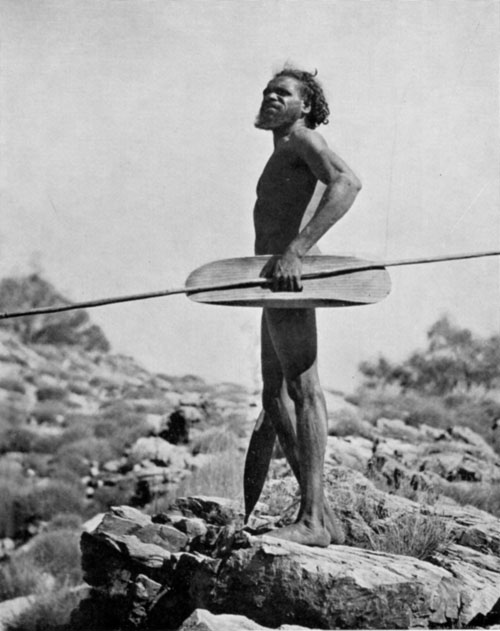
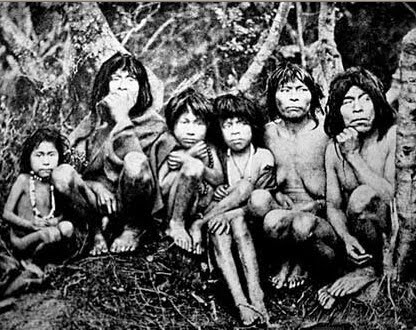
 . Vol. 1, pp. 414-15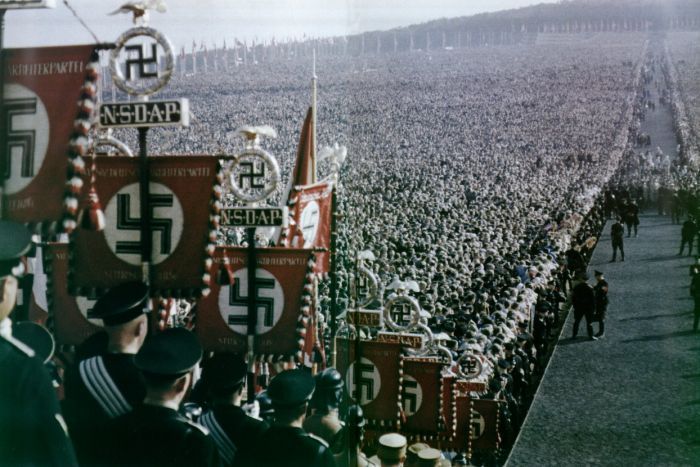


 (1889), Fustel de Coulanges spells out in detail the darkness of this Christless world: